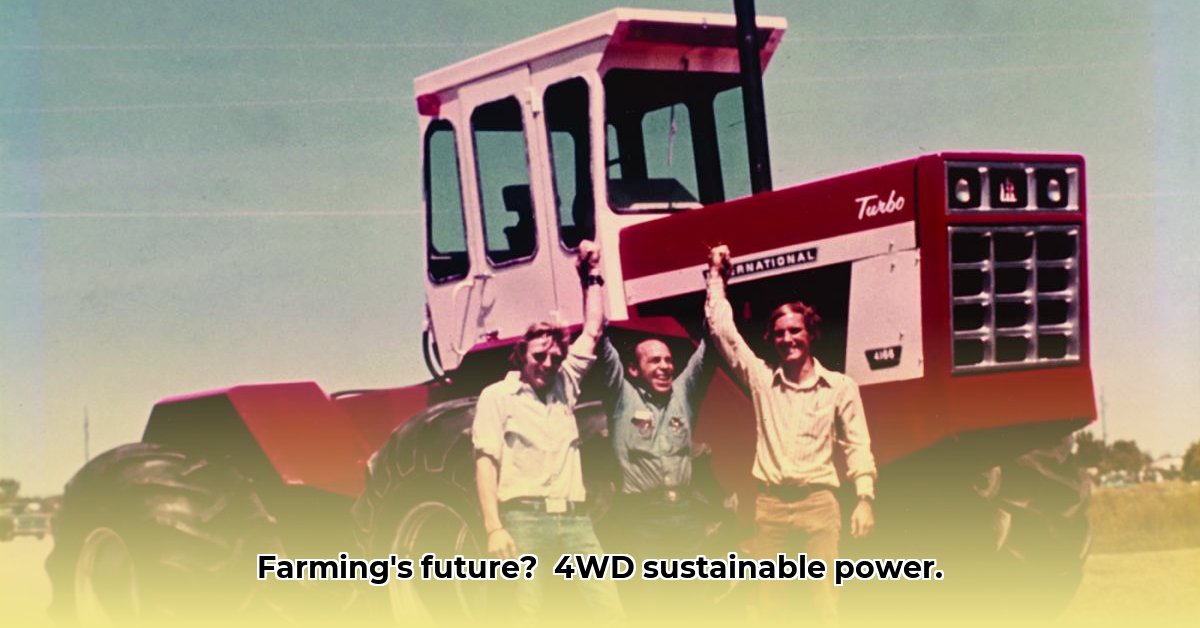
A Revolution in the Fields: The Rise of the International Harvester 4WD
For generations, the iconic roar of International Harvester (IH) 4WD tractors has resonated across American farms, symbolizing a profound shift in agricultural practices. These weren't merely machines; they represented a transition from backbreaking manual labor to mechanized, high-yield farming. But this technological leap forward presents a complex legacy—one intertwined with both remarkable progress and significant environmental considerations. This article explores the historical impact of the IH 4WD tractor, its environmental footprint, and the path toward a more sustainable future in agriculture. Learn more about other historic farm equipment like the Minneapolis-Moline here.
How did the introduction of these powerful machines fundamentally alter the agricultural landscape? The answer lies in the sheer increase in efficiency and productivity they unleashed. Before the widespread use of IH 4WD tractors, farming was an intensely labor-intensive process, reliant on human muscle and animal power. This inherently limited the size of cultivable land and overall yield. Suddenly, with the advent of these powerful machines, farmers could cultivate considerably larger areas, leading to a dramatic increase in food production – a crucial factor in supporting a burgeoning global population. This technological revolution also spurred the creation of new jobs in manufacturing, maintenance, and repair of agricultural machinery, dramatically reshaping rural economies.
The Environmental Footprint: A Necessary Reckoning
While the IH 4WD tractor undeniably boosted efficiency and yields, it's crucial to acknowledge the associated environmental costs. Early models, for example, were notoriously fuel-inefficient, heavily reliant on fossil fuels and contributing significantly to greenhouse gas emissions. The manufacturing process itself, demanding substantial raw materials and energy, added to the overall environmental burden. While some argue that increased yields may have offset the per-unit environmental cost, a complete life-cycle assessment—from manufacturing to disposal—remains crucial for a comprehensive understanding. This is further complicated by the changes in farming practices prompted by the wider use of tractors, which may have impacted biodiversity and soil health. Intensive farming methods, often facilitated by these machines, can lead to soil erosion and depletion, effects that are still being assessed.
Did the increase in agricultural productivity outweigh the environmental consequences? This remains a subject of ongoing debate and research.
Precision Agriculture: A Step Towards Sustainability
Later IH models began incorporating innovative features, hinting at a more sustainable approach. Technologies like Sentry monitoring systems paved the way for precision agriculture, where resource use is optimized through advanced technology. Imagine GPS-guided tractors, intelligently dispensing fertilizer and pesticides only where needed, minimizing waste and reducing environmental impact. This represents a shift away from the "more is better" philosophy of earlier eras toward smarter, more deliberate resource management. However, the extent to which IH actively pursued sustainable practices during its operational lifetime remains a point of discussion among historians. What was considered technologically advanced then might be assessed differently with the benefit of hindsight and our evolving understanding of sustainability.
A Legacy of Innovation and Challenges: Looking Ahead
The International Harvester 4WD tractor’s legacy is multifaceted. Its impact on increased food production and agricultural efficiency is indisputable, yet the environmental impact of its heavy reliance on fossil fuels remains a vital concern. It represents a pivotal period where technological progress needs to be viewed through the lens of long-term environmental responsibility.
Pivotal Points:
- The IH 4WD tractor revolutionized farming, significantly increasing yields and reshaping rural economies.
- The environmental impact of early models, including fuel consumption and manufacturing processes, needs further investigation.
- Precision agriculture, incorporating technologies like GPS guidance, offers a pathway toward more sustainable farming practices.
Charting a Course Towards Sustainable Agriculture: Practical Steps
- Transition to Alternative Fuels: Explore and adopt alternative fuels such as biodiesel and bioethanol (90% reduction in GHG emissions possible with some biofuels).
- Embrace Precision Agriculture: Implement and refine GPS-guided technology and other precision tools to optimize resource use (potential for 20-30% reduction in fertilizer and pesticide use).
- Sustainable Manufacturing Practices: Prioritize the use of recycled materials and reduce waste and emissions during the manufacturing process (targets varying by manufacturer and material).
- Invest in Technology Training: Support programs that retrain agricultural workers to effectively utilize new technologies (improved worker satisfaction and increased adoption rates).
The story of the International Harvester 4WD tractor is more than just a technological narrative; it's a crucial chapter in the broader story of agricultural innovation and the pursuit of sustainable food production. By critically analyzing both its triumphs and its challenges, we can glean valuable lessons and develop strategies for a more ecologically conscious agricultural future. The future of farming depends on learning from the past and embracing a responsible, environmentally conscious approach.